Indoor Surveillance Drone
My Electrical Engineering Design Project: an autonomous indoor surveillance drone from scratch using Time-of-Flight (ToF) sensors for navigation. Custom chassis designed in Fusion360 with 3-minute flight time.
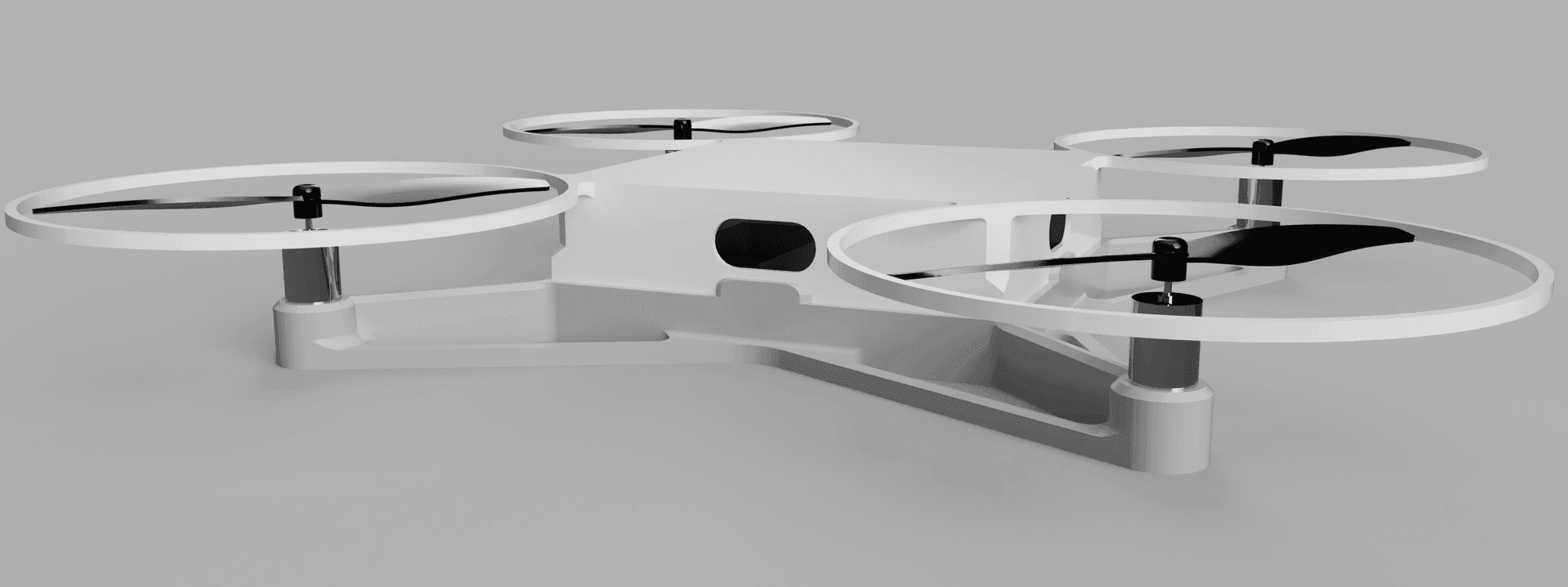
Final CAD render of the autonomous quadcopter
Development & Testing
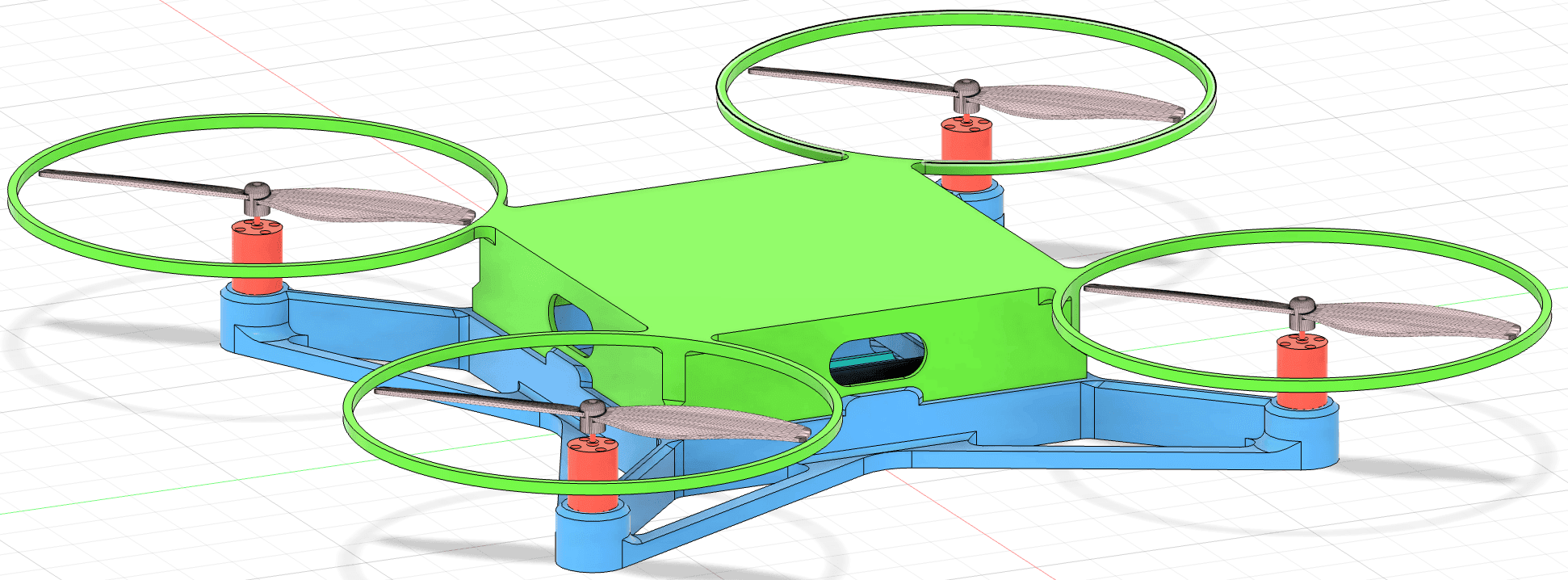
Pre-Final Assembly
Iterative design refinement before final version
The Challenge
Building an autonomous indoor surveillance drone requires precise navigation in GPS-denied environments. The challenge was to create a compact, lightweight system that could navigate indoors using Time-of-Flight sensors while maintaining stable flight within a 3-minute flight time constraint.
- •Designing for indoor navigation without GPS signals
- •Implementing ToF sensor-based obstacle detection and navigation
- •Balancing power consumption to achieve 3-minute flight time
- •Designing a custom chassis in Fusion360 optimized for indoor surveillance
The Approach
1.Custom Chassis Design in Fusion360
Designed a lightweight, compact chassis optimized for indoor surveillance operations. Used Fusion360 for parametric modeling and iterative design refinement.
2.Time-of-Flight Navigation
Implemented ToF sensor-based navigation for GPS-denied indoor environments. The ToF sensors provide precise distance measurements for obstacle avoidance and spatial awareness.
3.Control Systems & Stabilization
Developed flight control systems for stable indoor operations, integrating IMU data with ToF sensor readings for precise positioning and control.
4.Safety-First Testing
Conducted all initial tests indoors with protective barriers. Gradually increased autonomy as confidence in the system grew.
Design Evolution
The drone went through multiple iterations, from initial concept to final design. Each version improved on weight, stability, and functionality.
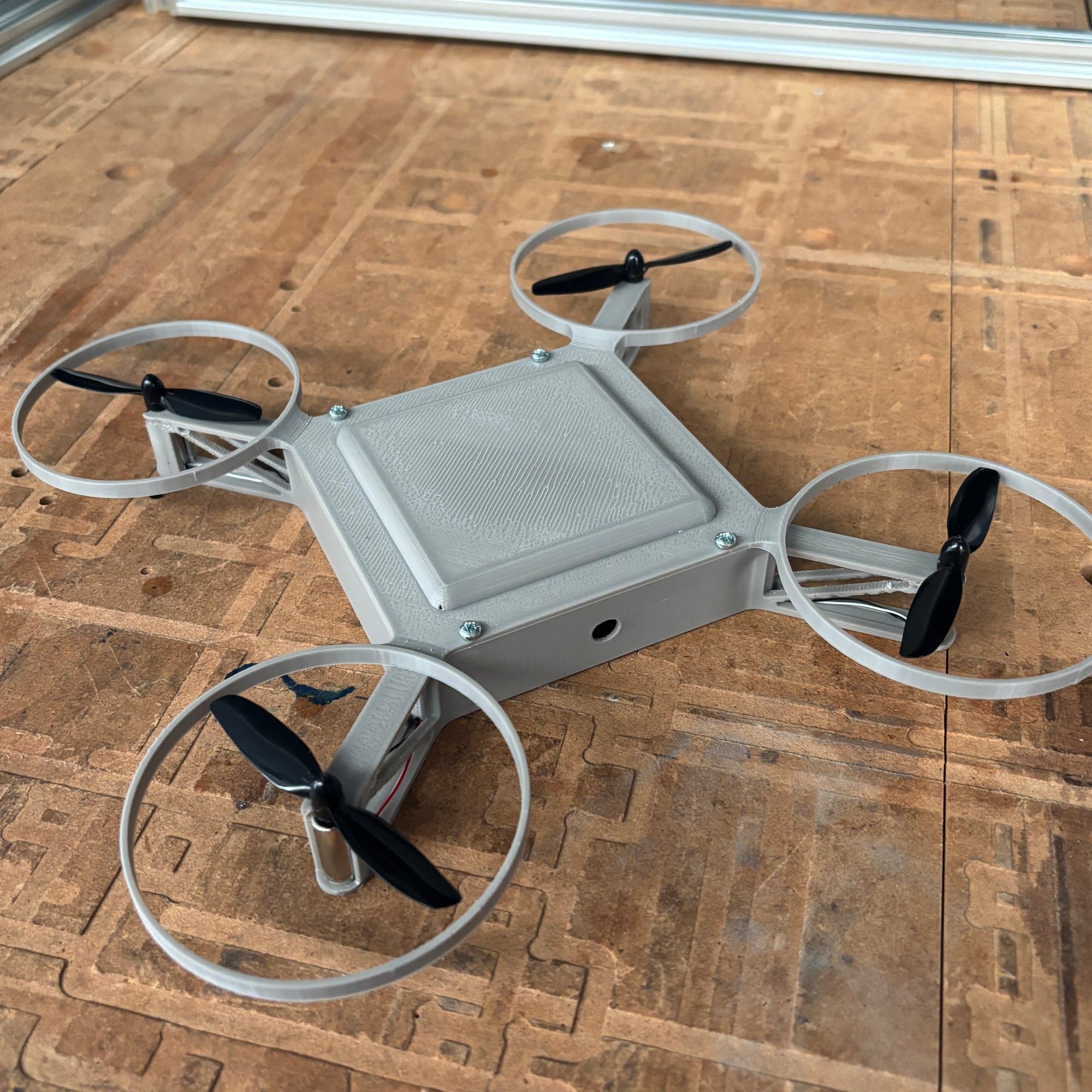
Initial overbuilt design for safe testing. Too heavy for optimal flight time.
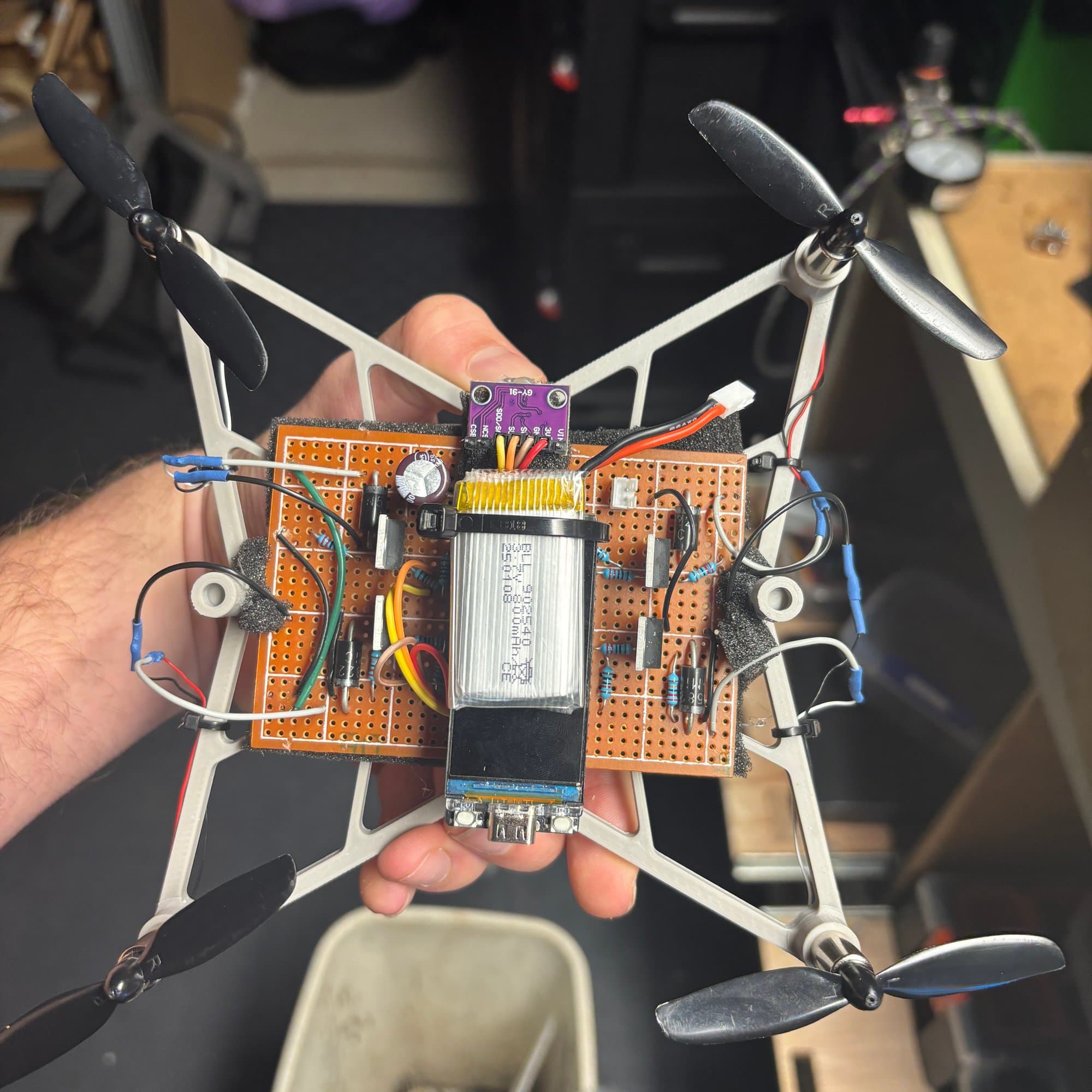
Lighter plate-based design with improved weight distribution.
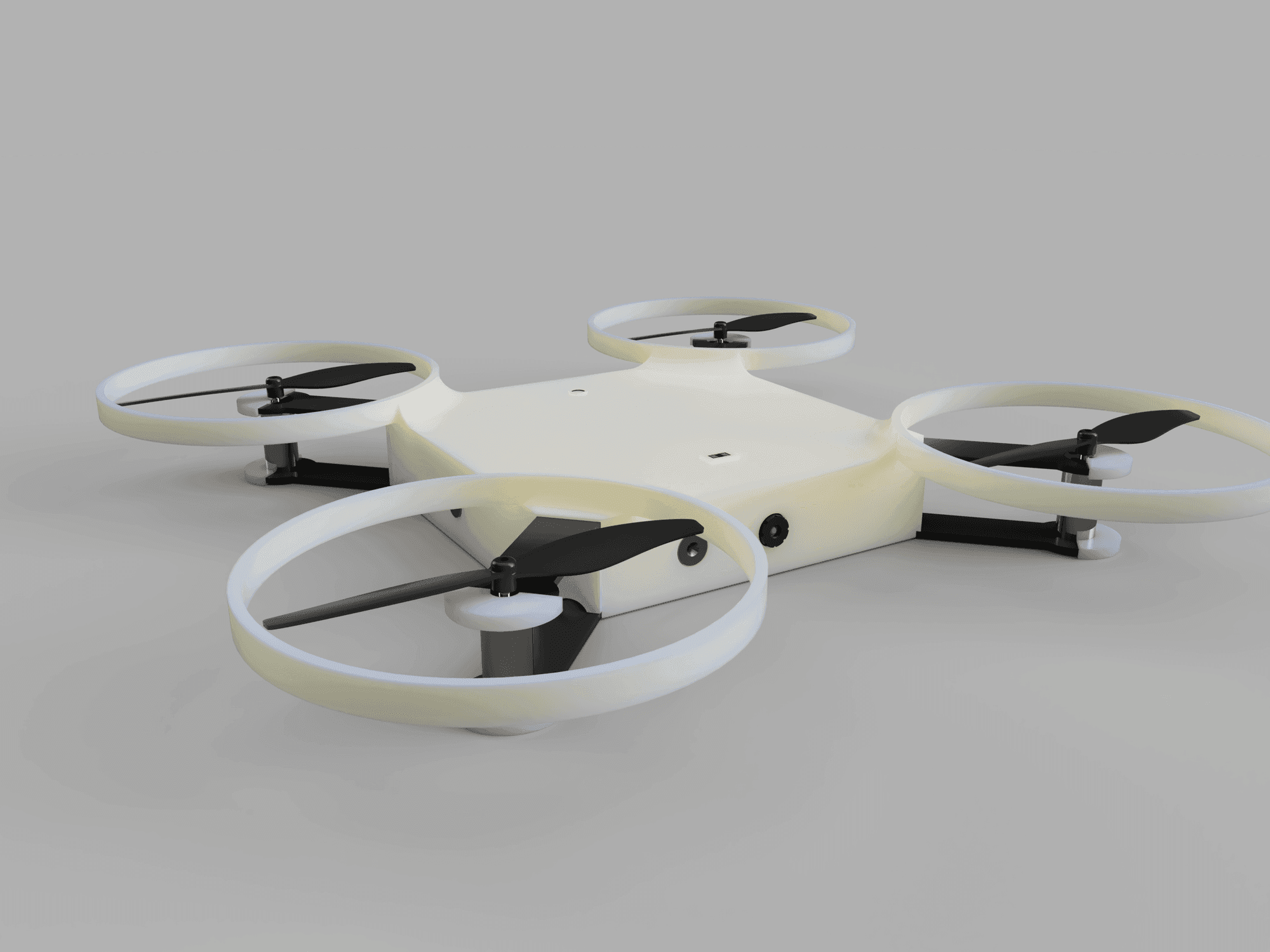
Initial CAD design in Fusion360 based on prototype learnings.
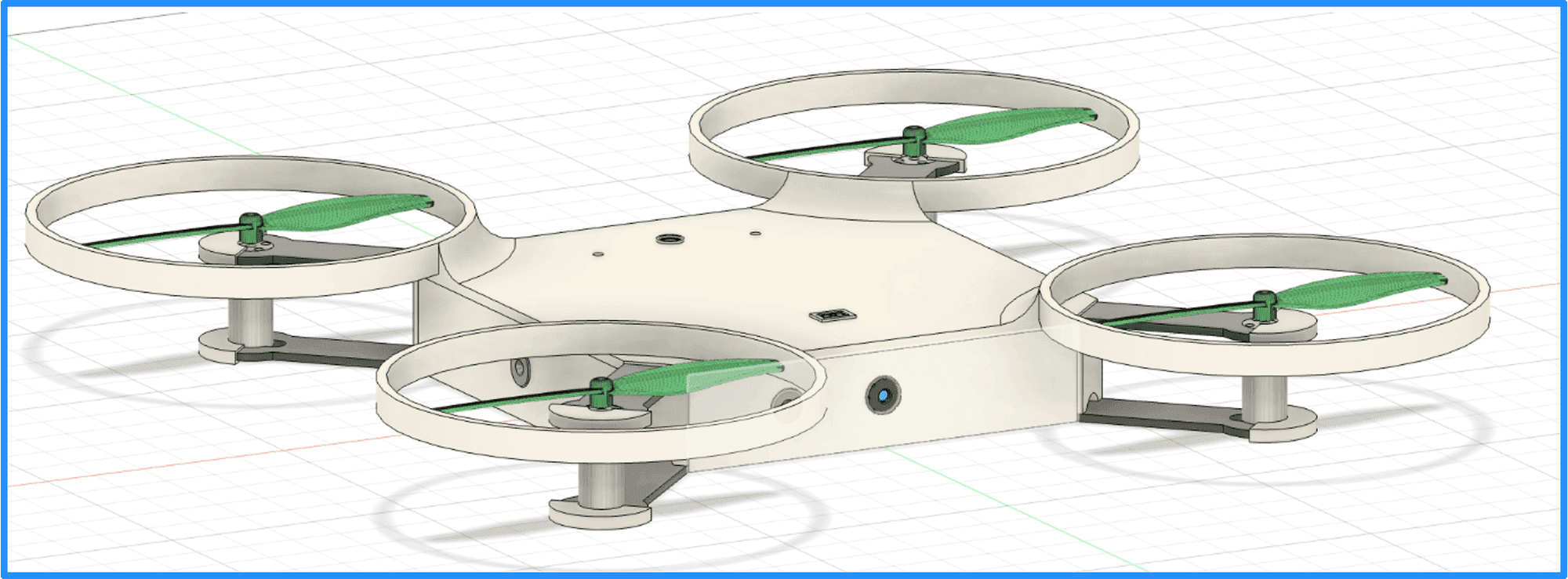
Parametric design in Fusion360 for easy iteration and modifications.
Technical Details
Challenges Overcome
Challenge: Chassis Was Too Heavy
Problem: Initial protective design was 40% heavier than necessary, reducing flight time significantly.
Solution: Iterative weight reduction while maintaining structural integrity. Final design achieved 30% weight reduction using topology optimization and material substitution.
Challenge: Oscillation in Flight
Problem: Initial PID values caused the drone to oscillate wildly, unable to stabilize.
Solution: Implemented data logging and systematic PID tuning using Ziegler-Nichols method. Reduced oscillation by 90% through careful parameter adjustment.
Challenge: Indoor Navigation Without GPS
Problem: GPS signals don't work indoors, requiring alternative navigation methods for surveillance operations.
Solution: Implemented Time-of-Flight (ToF) sensors for precise distance measurements and obstacle detection. Combined with IMU for stable indoor autonomous flight.
Lessons Learned
Theory vs. Reality
Textbook PID tuning methods are a starting point, not the solution. Real-world systems require extensive testing and iteration.
Design for Testing, Not Perfection
Starting with an overbuilt, protective chassis was the right call. It allowed aggressive testing without fear of destroying the drone.
Data Is Everything
Logging sensor data and control outputs was crucial for debugging. Without telemetry, I would have been guessing blindly.
Incremental Autonomy
Don't try to go from manual control to full autonomy in one step. Gradually reduce pilot intervention as confidence in the system grows.
Related Blog Posts
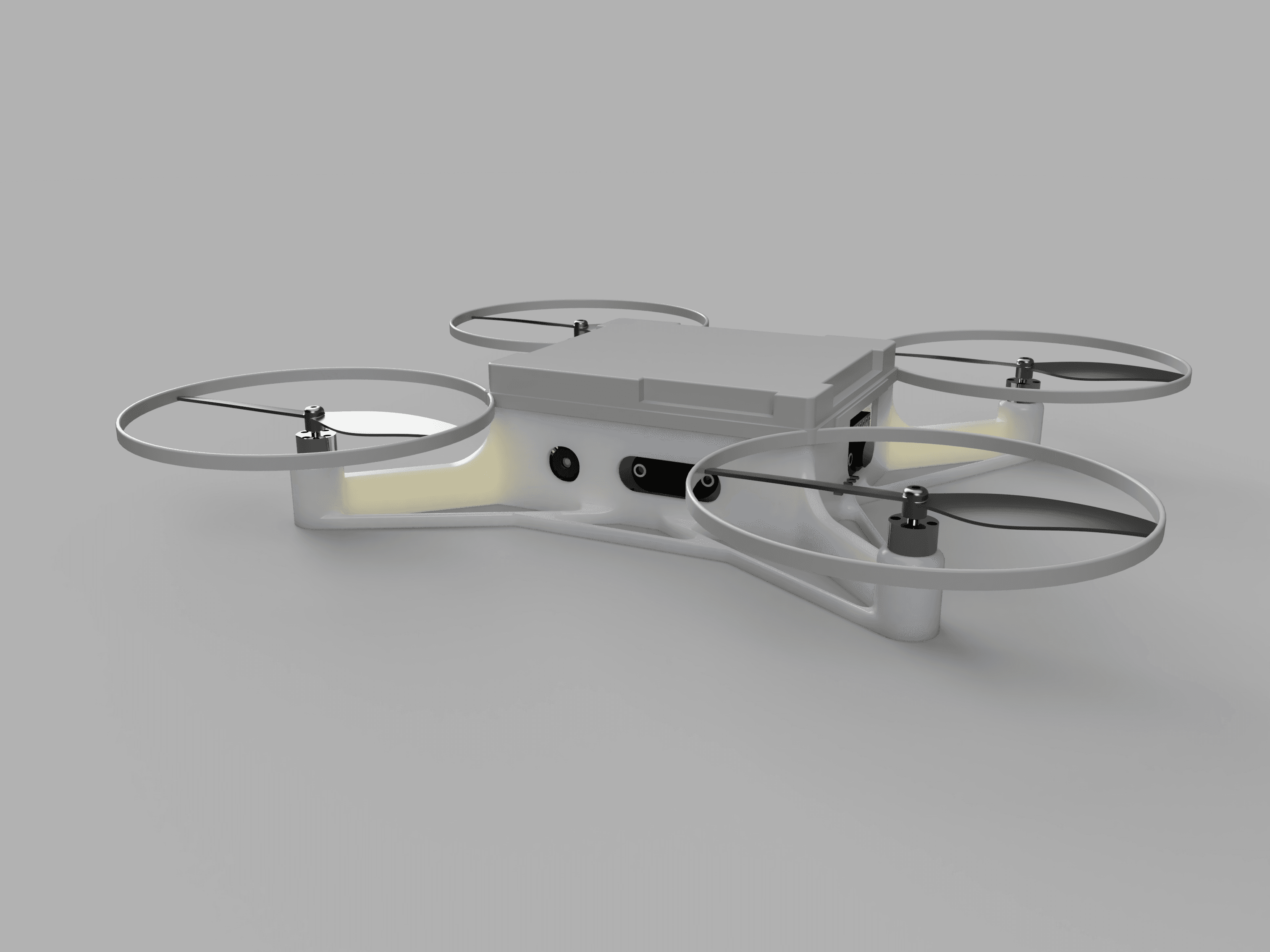
Iterating to Lift-Off: The Design Journey Behind Our Indoor Drone →
Five prototypes, countless redesigns — how we learned to balance weight, rigidity, and vibration in pursuit of stable flight for our indoor drone.
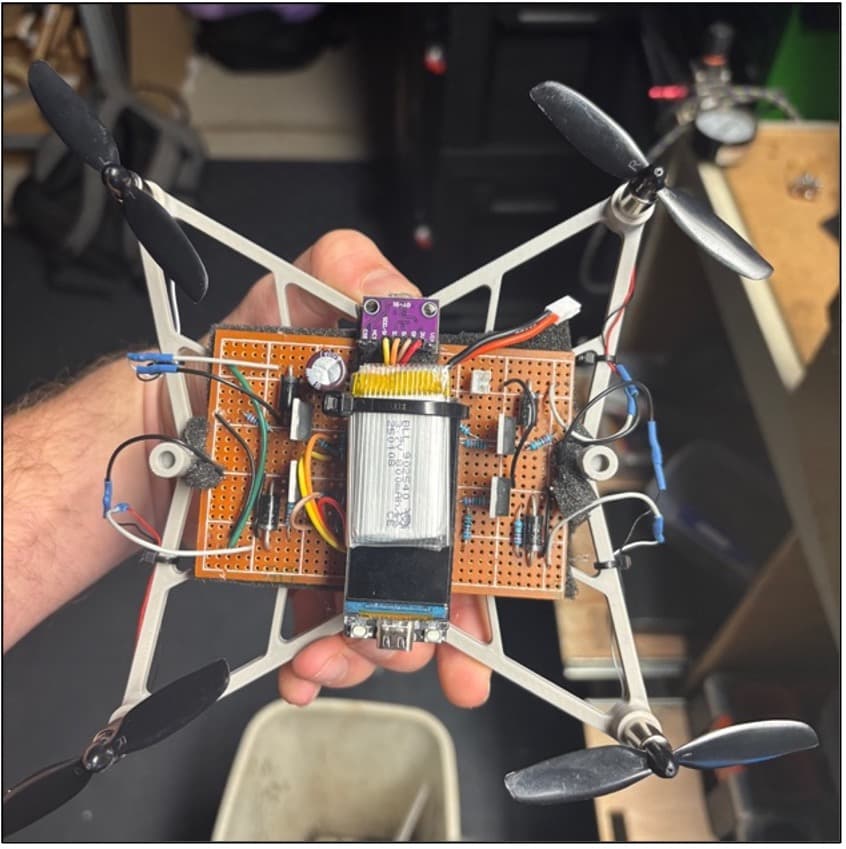
Building a GPS-Free Drone: Engineering Indoor Autonomy from Scratch →
How our team engineered an indoor surveillance drone that could navigate, hover, and avoid obstacles entirely without GPS.
Interested in Robotics or Control Systems?
I'm always happy to discuss drones, embedded systems, and control theory. Let's connect!
Get in Touch